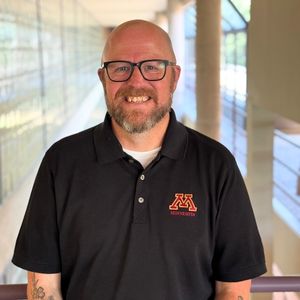
With Colin Miller
Transcript
Hello, I'm Colin Miller. I'm the Faculty Director of Information Technology at CCAPS.
In simple terms, how would you define information Technology Infrastructure (ITI), and why is it important?
Information Technology Infrastructure is the framework or the backbone of digital computing. No company would be successful without IT infrastructure. Networking, security, database management, cloud computing, AI, you name it, is reliant upon the infrastructure, the technology infrastructure to be successful.
What are two of the most common misconceptions people have about ITI?
It's fixing computers and doing desktop support and also that it's not creative or strategic, which is far from the truth. It requires creativity and strategic thinking when you're talking about building a network, when you're talking about setting up a cybersecurity environment, when you're talking about building a database, when you're talking about setting up the CICD structure for DevOps environment. And so it requires significant creativity and strategic thinking.
Acknowledging it’s an ever-growing and rapidly changing field, what are some of the most in-demand ITI career paths today?
I'll give it the top four: cybersecurity, artificial intelligence, cloud computing and data science. These are areas of technology that are in high demand. We are looking to bring in new programs. Project management, artificial intelligence and machine learning, web development. And so, these are areas that are growing quite rapidly and emerging quite rapidly in the marketplace.
If you could wave a magic wand and change something about the IT industry, what would it be?
It would be a false conception between tech people and non-tech people: For those who are non-tech, they often think that "I can't do IT," which is not true. If you have the curiosity and if you're willing to learn, you can be an IT professional, you can learn something in IT.
You emphasize the importance of soft skills like public speaking and communication. Why are these skills critical for IT professionals?
I would say soft skills are very important. The day and age of the IT professional that's just a technician is over. They need to be able to effectively communicate in their writing, in their speaking, in their communication. We live in a day and age where everything is agile and collaborative. If you are not working in your soft skills, you could potentially be left behind in terms of growth and progression in your career.
What are some characteristics of the University’s ITI program that distinguishes it from other ITI programs?
It's a program that emphasizes hands-on experience. So, in a number of our classrooms, you'll have lab activity where students are working together in groups. And because of the nature of ITI or Information Technology Infrastructure, you'll need to know how to work those areas of technology even before you get into the marketplace. And what makes this so exciting is that our instructors come from the marketplace. They're intentionally adjunct instructors, and they bring their work experience in the classroom.
Is there someone in the field whose work you follow or admire?
Sam Altman, in terms of what he's doing with, OpenAI and ChatGPT. It's quite revolutionary.
What’s your "happy place" — the environment where you feel most at ease or inspired?
I'm inspired when I see students get … where the light bulb is turned on as I'm conducting a lesson or running a lab or having a conversation with the student. And literally I can just see them say, "Oh, I get it! I get it." And that's exciting for me.
Can you share a lesson or piece of advice you gained from a mentor or role model that you now pass along to your students?
Make time to meet with your instructor. Our instructors like to meet with their students, and you'll be surprised, in meeting with some of these instructors, they'll give you the answers. I'm one of those instructors.
About Field Notes
Field Notes is a collection of short video interviews with College of Continuing and Professional Studies faculty and advisors, showcasing the wide range of professions supported by the College’s educational paths—from undergraduate and graduate degrees to minors and certificates.